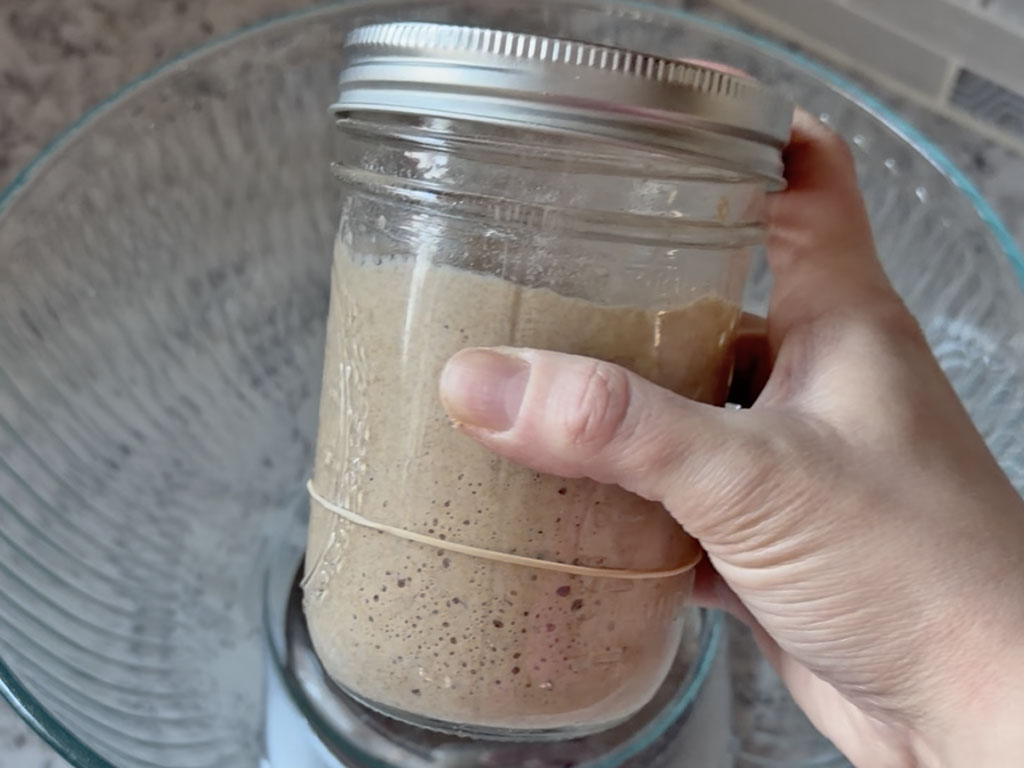
Step 1: Feed the starter (Night Before). Feed your starter and leave it at room temperature (75-78°F / 24-26°C) overnight until active, bubbly, and at least doubled. Place a rubber band around the jar at the starting level so you can easily see how much it has risen.
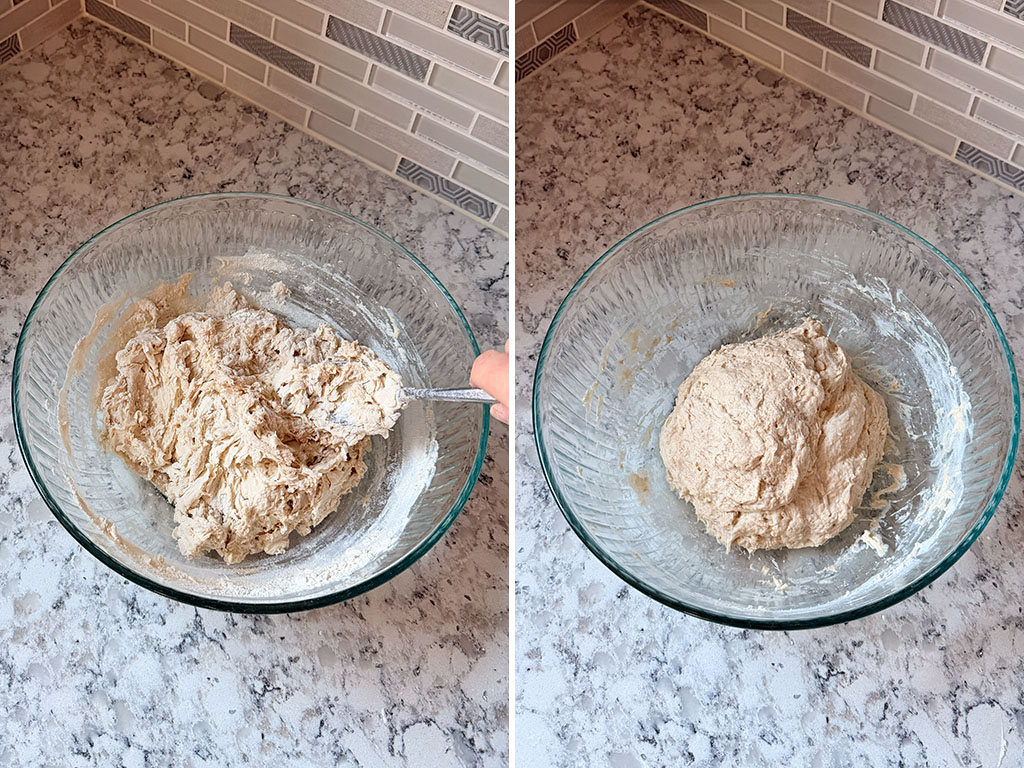
Step 2: Mix the dough (Morning). In a large bowl, combine flour, salt, starter, and water. Use a kitchen scale for accurate measuring. Stir with a spoon, then use wet or lightly floured hands to mix until a dough forms and no dry flour remains. You can also mix it in a stand mixer with a dough hook just until combined. Cover with a lid or plastic wrap.
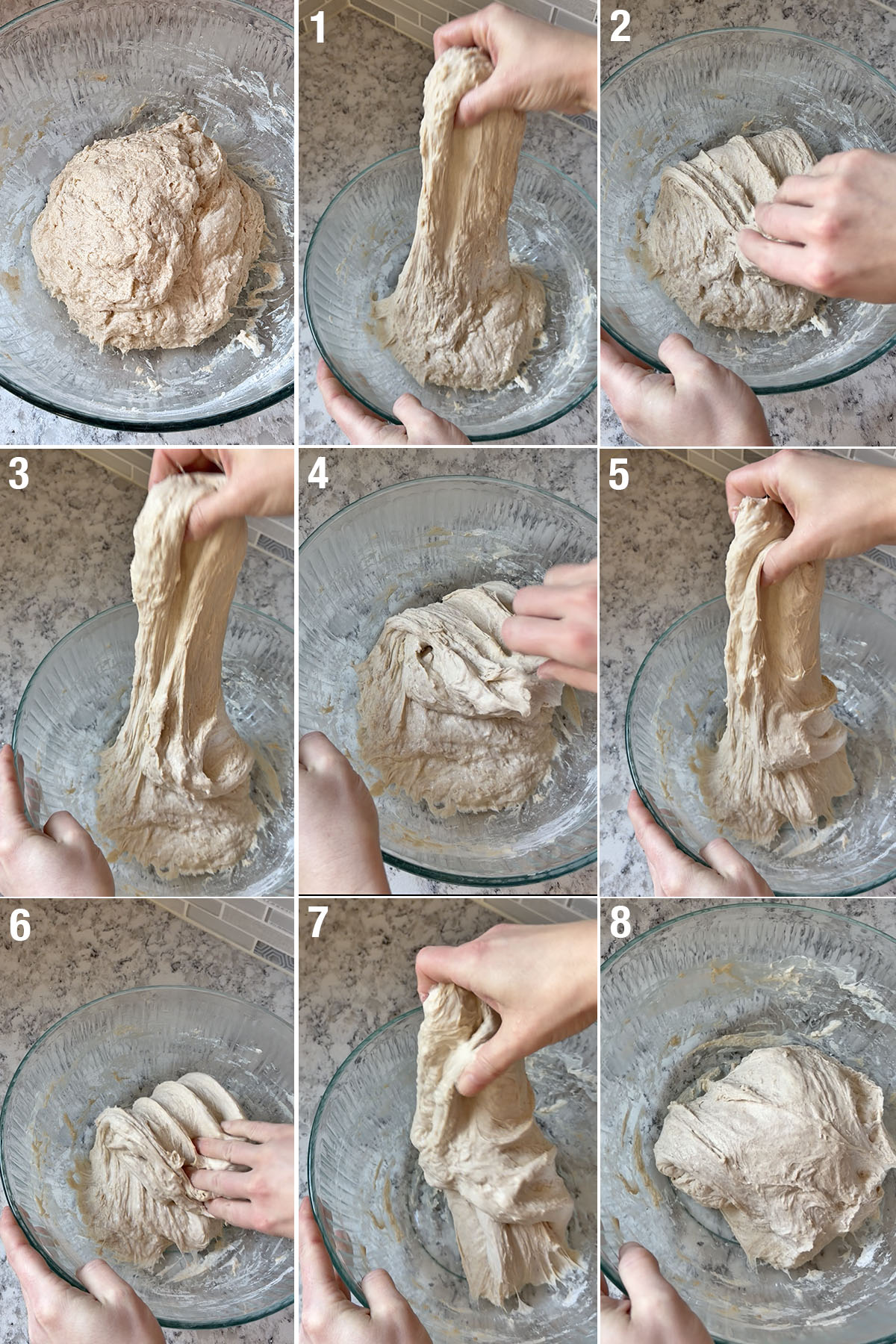
Step 3: Stretch and Folds. (Structure Building) Do 4 stretch-and-fold rounds, waiting 30 minutes between each round.
Timing:
- Do first round 30 minutes after mixing
- Do second round 30 minutes later
- Do third round 30 minutes later
- Do fourth round 30 minutes later
How to do each round: Wet your hand to prevent sticking. Grab one edge of the dough and gently stretch it upward without tearing (shake slightly if needed so it stretches naturally), then fold it over to the opposite side. Rotate the bowl 1/4 turn and repeat on all four sides - this completes one round. Don’t worry if it feels sticky, that’s normal. The initially sticky dough will become smoother, stronger, and less sticky after each round.
 Step 4: Bulk fermentation (Daytime).
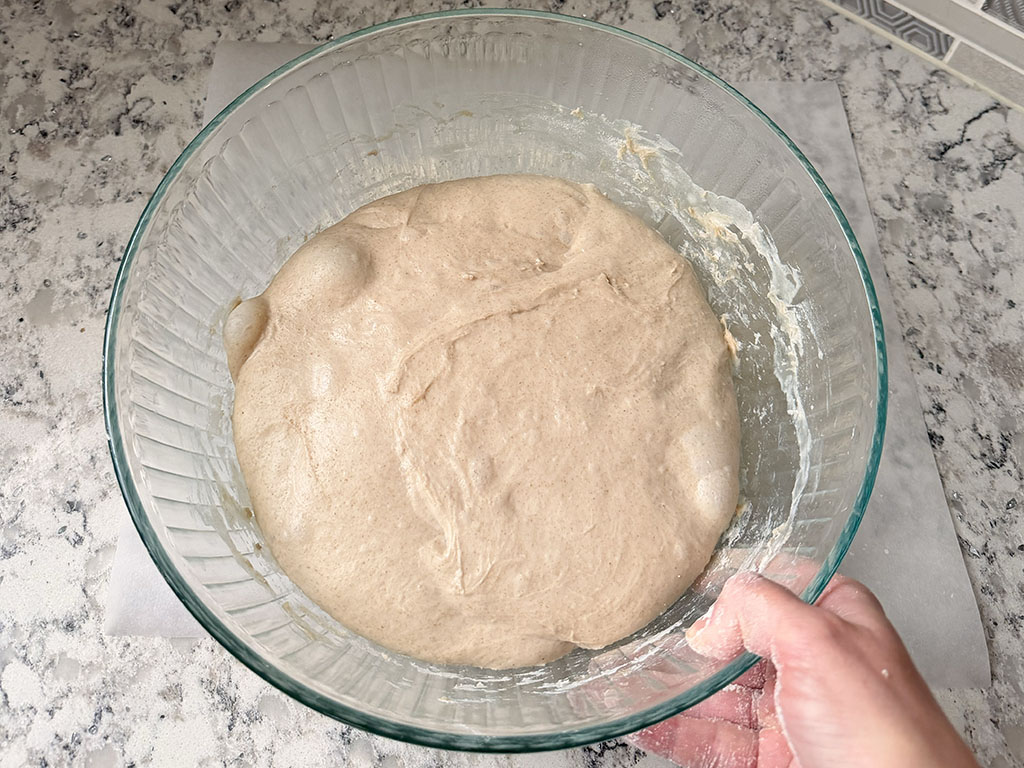
 After the final fold, cover and let the bread dough ferment at room temperature (75-78°F / 24-26°C) for 5-7 hours, until evening. It should look airy, slightly domed, and increase in size by at least 50% before moving to the next step.
 Step 5: Pre-shape (Evening).
 Place the dough onto a lightly floured surface (I used a 50/50 mix of semolina and flour).
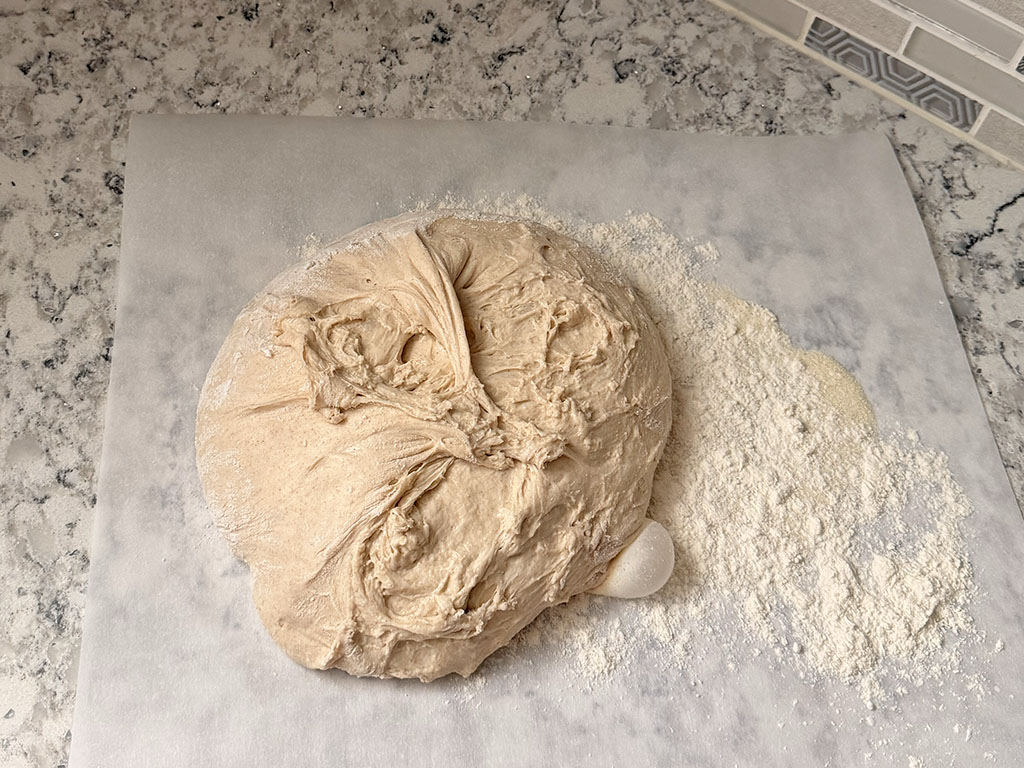
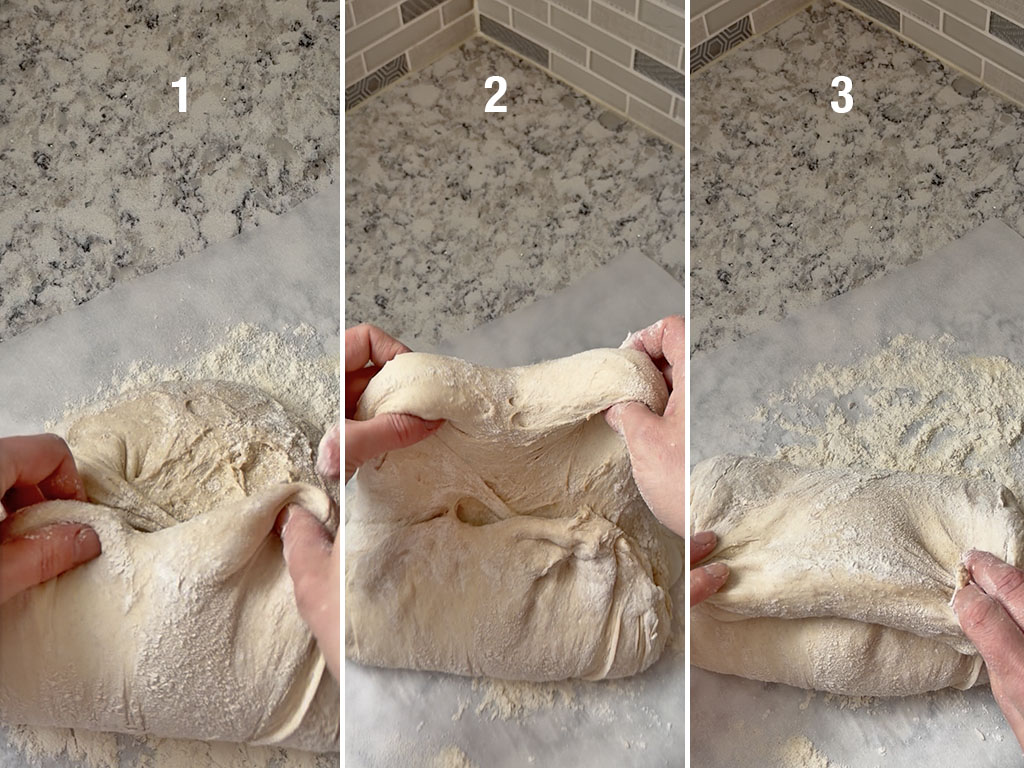
Gently stretch it into a rectangle. Fold the top third down and the bottom third up to form a loose packet.
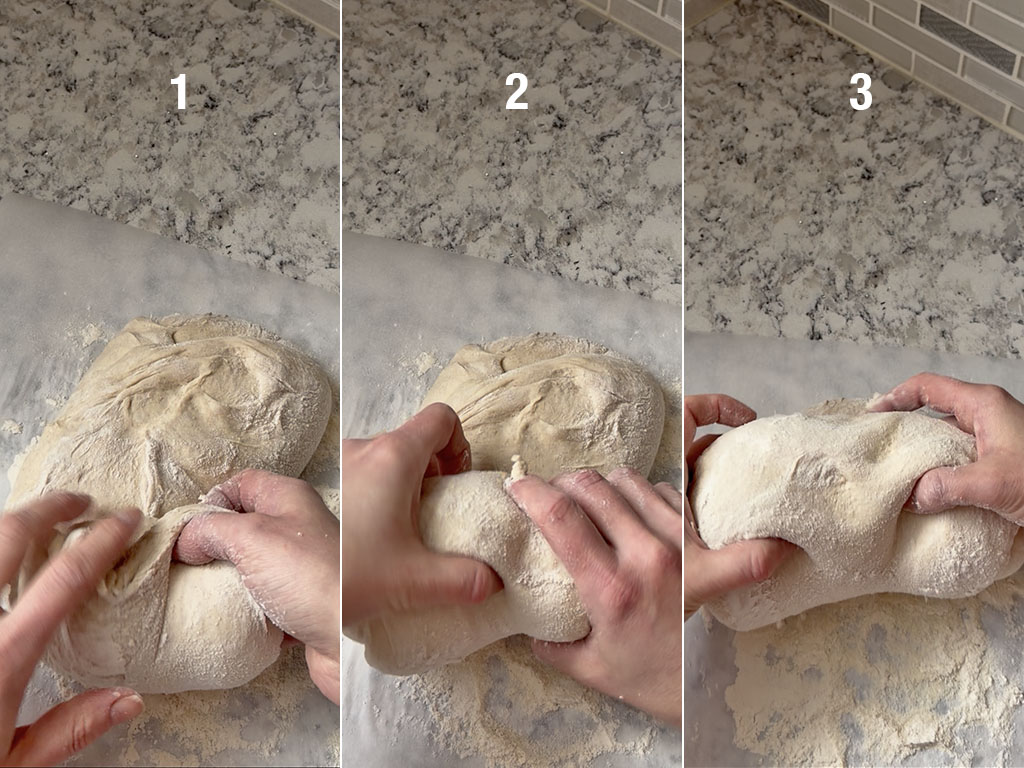
Rotate the dough 90 degrees, then gently roll it into a log. Avoid pressing or deflating the dough.
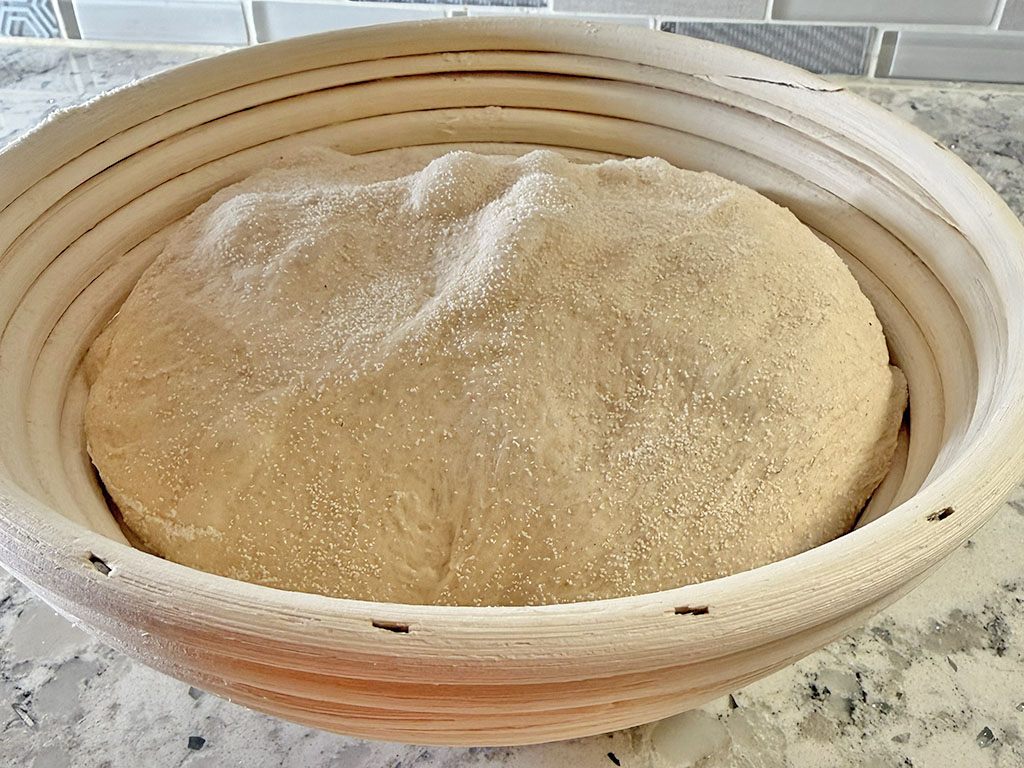
Step 6: Banneton + overnight cold proof. Dust your banneton with a 50/50 mix of semolina and flour (you can also use rice flour + flour, or just flour). Place the dough inside, cover with plastic wrap secured with a rubber band (or a shower cap or large plastic bag), and refrigerate overnight.
 Step 7: Bake sourdough bread.
 Preheat oven to 450°F (230°C). Turn the dough onto a piece of parchment paper. Score the top of the dough with a razor blade, bread lame, or very sharp knife, cutting about 1/4 inch (~0.6 cm) deep - a sharp blade makes a clean cut without dragging or deflating the dough. Add several small angled cuts along each side of that main cut.
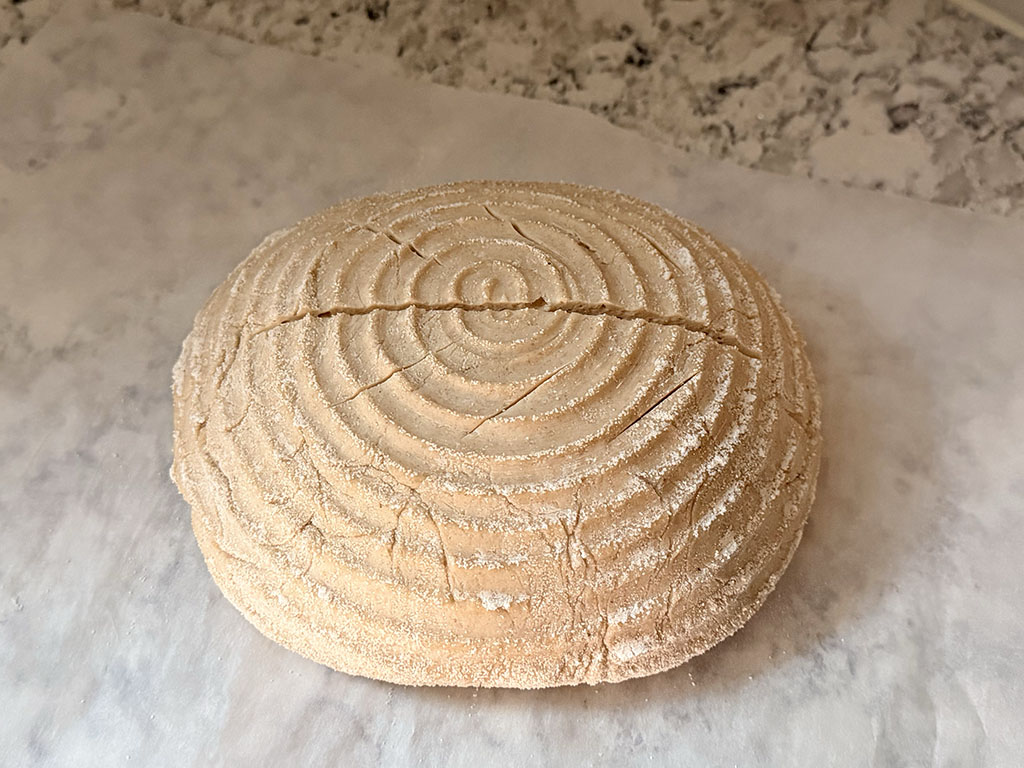
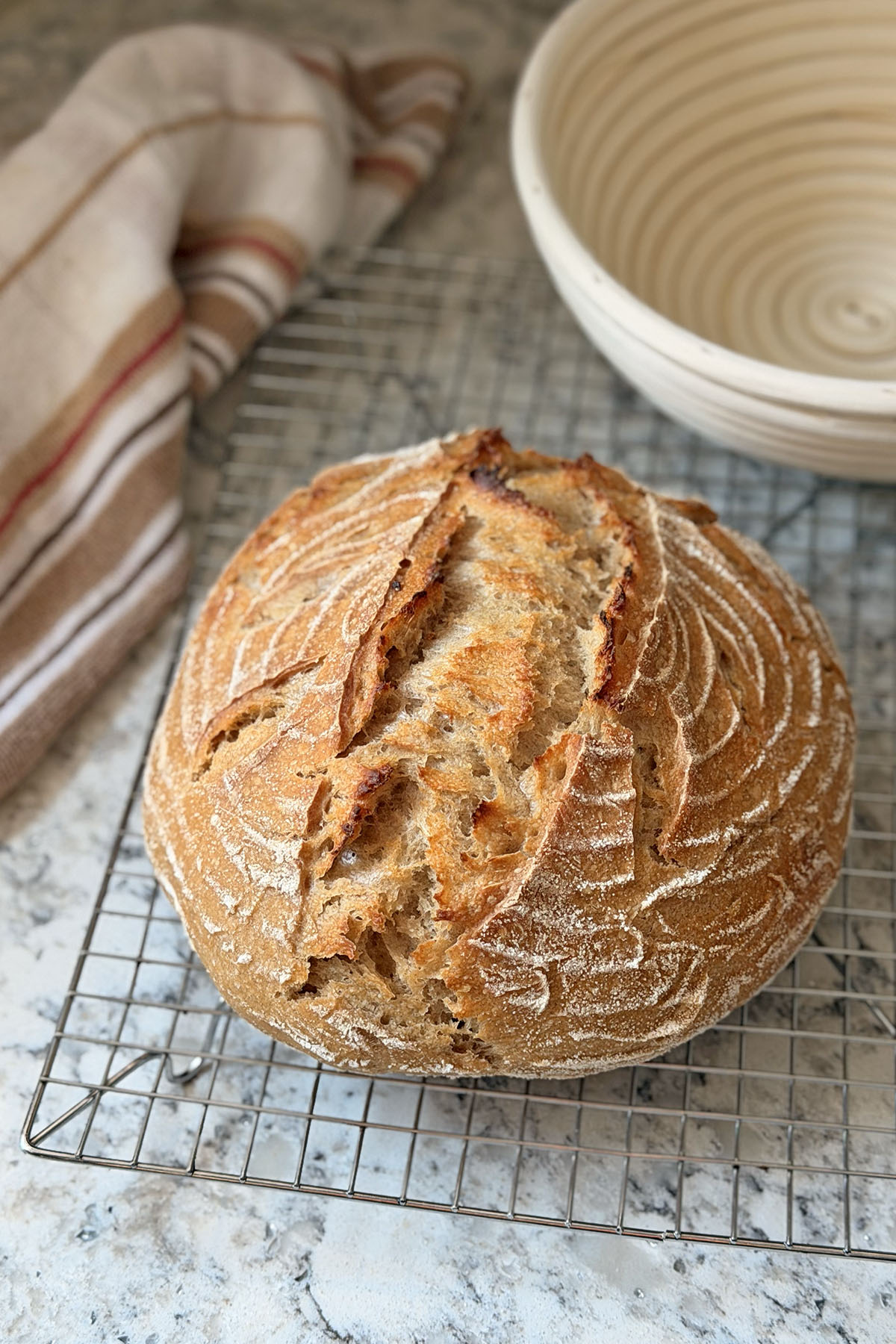
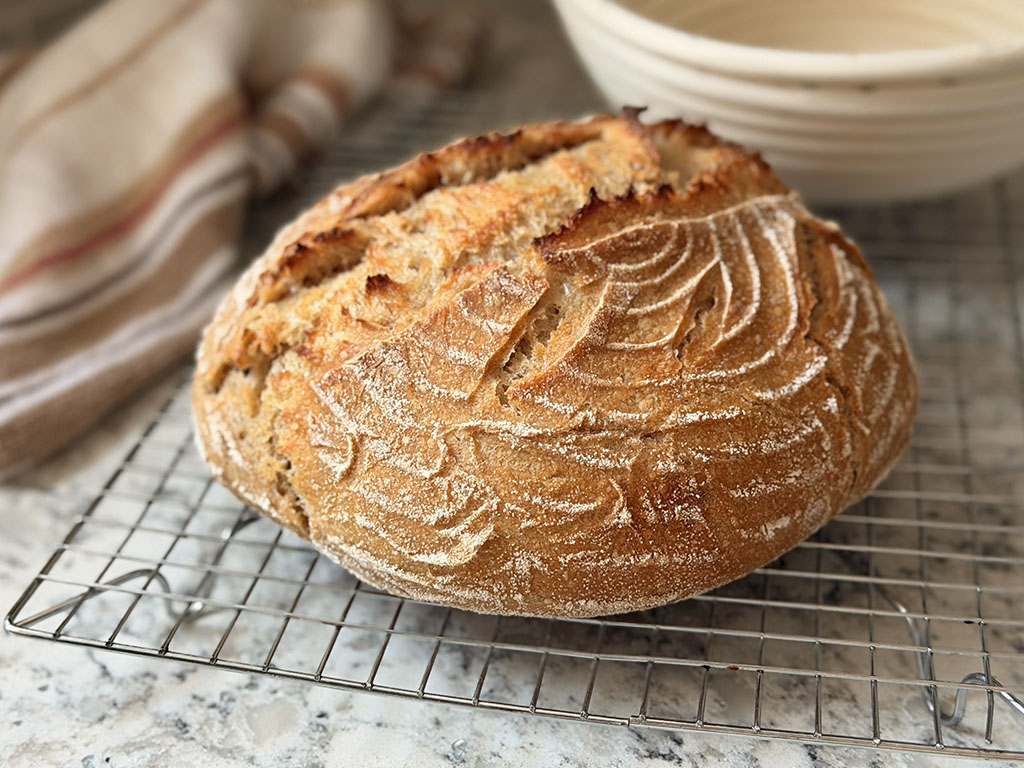
Place the dough (with parchment) into a cast iron Dutch oven, cover with the lid, and bake for 40 minutes. Remove the lid and bake 8-10 minutes more until deep golden brown. Cool the finished loaf completely before slicing.







.jpg "Beef Chebureki (Deep Fried Beef Dumplings)")



Comments